Relaxation – effective techniques for reducing stress and tension
Below is a list of relaxation techniques and activities that help reduce nervous tension and support recovery.
Assign each of them a value from “0” to “10”, where “0” means “this technique is completely not for me” and “10” means “this technique is definitely for me”.
| Factor | Value |
|---|---|
| Listening to nature sounds: birds singing, the sound of the sea/stream, rustling trees. | |
| Aromatherapy, e.g. pine, lavender, or vanilla essential oils. | |
| Mindfulness training, e.g. body scan. | |
| Side-to-side eye movements. | |
| Relaxing suboccipital muscles: lie down > chin to chest, back of the head pressed to the surface > head rotations. | |
| Relaxing the neck and shoulders: lie on your stomach > support yourself on your forearms > turn your head or entire torso. | |
| Body shaking: shake ankles, hips, chest, and head one by one. | |
| Visualization, e.g. a waterfall washing over you and cleansing your body of everything harmful: damaged cells, bacteria, viruses, flowing through tense muscles and relaxing them. | |
| Autogenic training (Schultz). | |
| Jacobson’s progressive muscle relaxation. | |
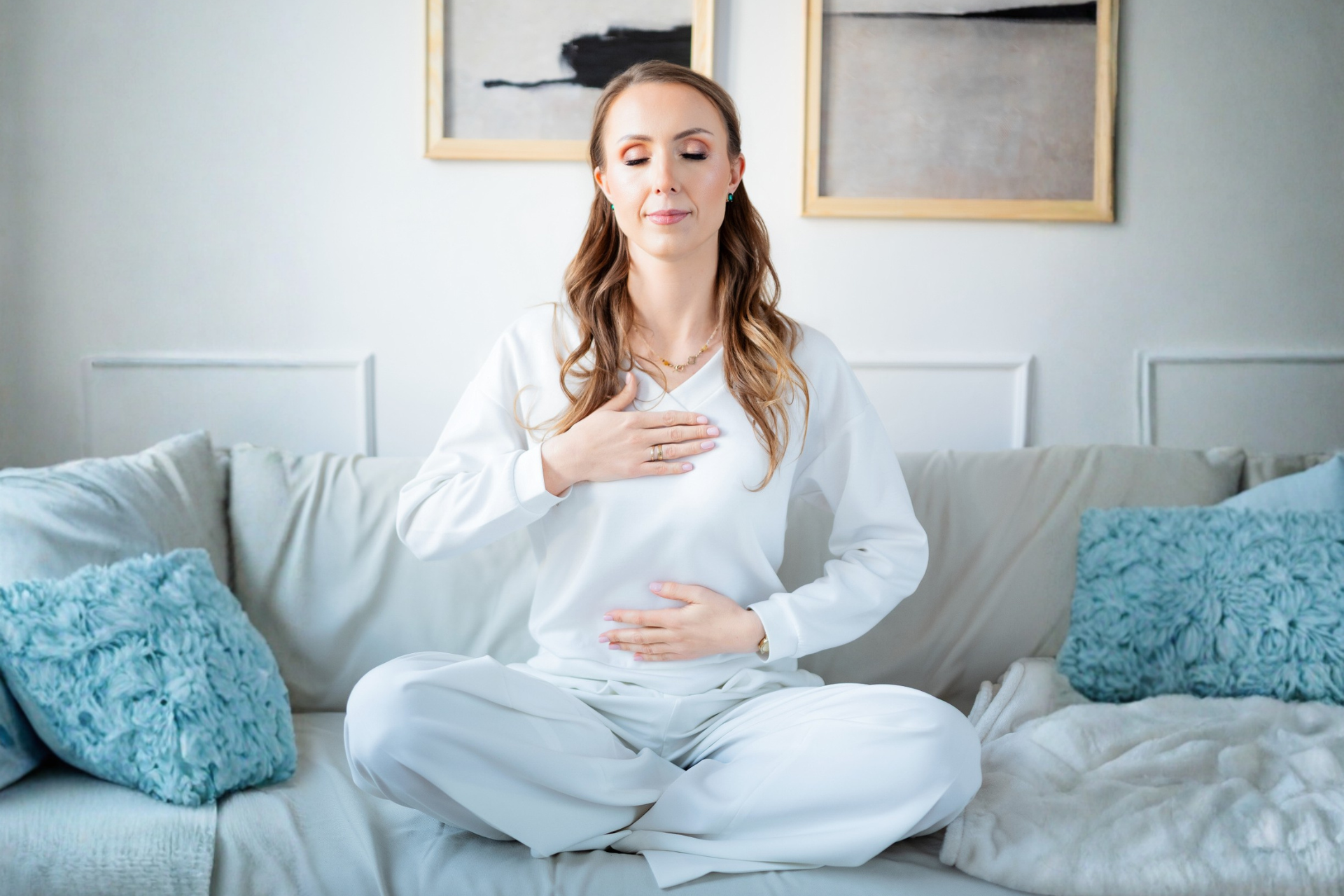
| Diaphragmatic breathing. | |
| Rubbing your hands together and placing them over your eyes. | |
| Breathing into your back. | |
| Self-massage, e.g. hands, face. | |
| Laughter therapy. | |
| Drawing mandalas or coloring. | |
| Touching different textures. | |
| Name all, e.g. white objects around you. | |
| Horticultural therapy (gardening activities). | |
| Color therapy = looking at green, blue, warm white, beige. | |
| Looking at water (lake, sea, river). | |
| Listening to alpha waves. | |
| Butterfly hug and applying pressure to different parts of the body. | |
| Butterfly massage: gently stroking the body with fingertips. | |
| Vision board: create a collage or album with photos, magazine cutouts, drawings that symbolize your dreams. | |
| Qigong. | |
| Yin yoga or chair yoga. | |
| Tai chi. | |
| Expressive writing: Are you overwhelmed with thoughts? Angry? Give yourself 10 minutes to write everything that comes to mind. Sentences do not need to be logical. You can write single words, fragments, or even draw what you are thinking about. Afterward, you can return to the content later or destroy the page. This technique is helpful for sleep problems caused by racing thoughts. It is worth keeping a notebook and pen by your bed. | |
| Gratitude: every evening write down things you are grateful for that day. | |
| Drawing with small strokes, e.g. spirals clockwise, lines from right to left and left to right, rows of lines from tallest to shortest. | |
| Sound of Koshi chimes, Tibetan singing bowls and gongs concerts. | |
| Breathing training, e.g. the Buteyko method. | |
| Yawning | |
| Chewing gum | |
| Hold an ice cube or another cold object | |
| For one full day, do only the things you feel like doing, e.g. a home spa. |